
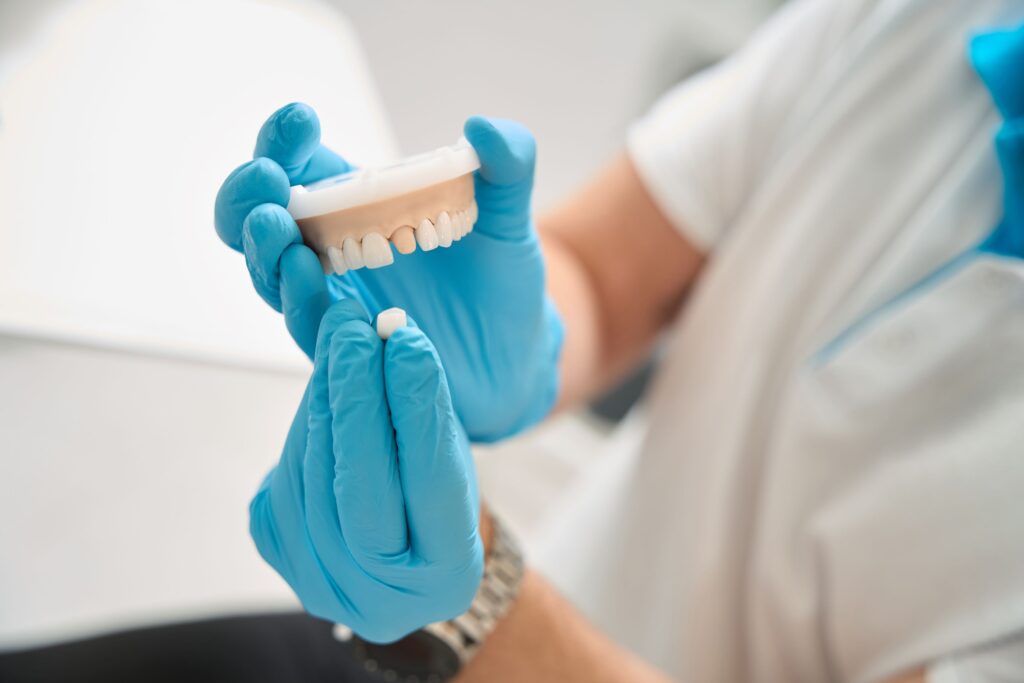
Have you recently undergone a root canal, or do you have a more severely injured or decayed tooth? If so, your dentist will likely recommend shielding it with a dental crown. These restorations are customized to resemble your enamel and are then cemented over your tooth to improve its appearance and allow you to continue using it normally.
But you might avoid scheduling your procedure if you’re feeling anxious about it. Continue reading to learn about 3 things that typically happen during dental crown appointments so you can set your mind at ease!
Step #1: Examination
Before proceeding, you must schedule an appointment with your provider so they can examine your condition to determine the best treatment option. They may also take X-rays or other scans and images to see beneath your enamel and gum tissue to assess the extent of any damage and determine whether any other services, like a root canal, are required.
Step #2: Numbing Your Tooth
Once your dentist determines that a dental crown is the best way to safeguard your smile, they’ll need to thin your enamel slightly so that the cap can fit correctly over your troubled tooth. This usually involves placing a local anesthetic to numb the area, which prevents the nerves in your teeth from sending pain signals to your brain.
If you’ve sustained an injury, are overly anxious, have a sensitive gag reflex, or struggle to sit still for longer periods, your provider might also a sedative, such as nitrous oxide (laughing gas) to help you feel calm and relaxed throughout the remainder of your visit.
Step #3: Thinning Enamel
Then, your dentist will carefully shave away a small amount of enamel to ensure your restoration will fit correctly without harming your bite alignment or looking awkward next to neighboring teeth.
Although this can slightly weaken the structure of your tooth, your dentist removes only as much of the protective outer layer as is required for your crown to function as intended to protect your dental health.
Step #4: Making Impressions
Next, your dentist will take impressions of your mouth, which can be done digitally but may also require a more manual approach. Either way, the information is used to create a model of your teeth that can be loaded into special CEREC (Chairside Economical Restoration of Esthetic Ceramics) software to create a same-day crown using an in-office milling machine, or shared with a dental laboratory to design and build a traditional prosthetic.
If you’re not receiving a CEREC cap in the same visit, your dentist will likely complete your visit by placing a temporary crown to shield your prepared tooth from potential injuries until the final product is delivered and can be cemented in place.
Meet the Author
Dr. Jordan J. Juarez (Dr. Jordan) takes pride in helping families in Carrollton improve their lives by enhancing their dental health. He earned his dental degree from the Pacific University in San Francisco, and today, he has a full decade of experience treating people of all ages. His caring approach combines with state-of-the-art technology to deliver a comprehensive menu of services, including traditional and CEREC dental crowns. You can request an appointment on the website or call (972) 306-2273.